Booking management · Updated · KLIOSO Team
Why Wrong Service Duration Disrupts a Hairdresser's Day
Accurate durations for cuts, colour and styling stop small delays from moving through the entire salon day and protect every client's confirmed time.
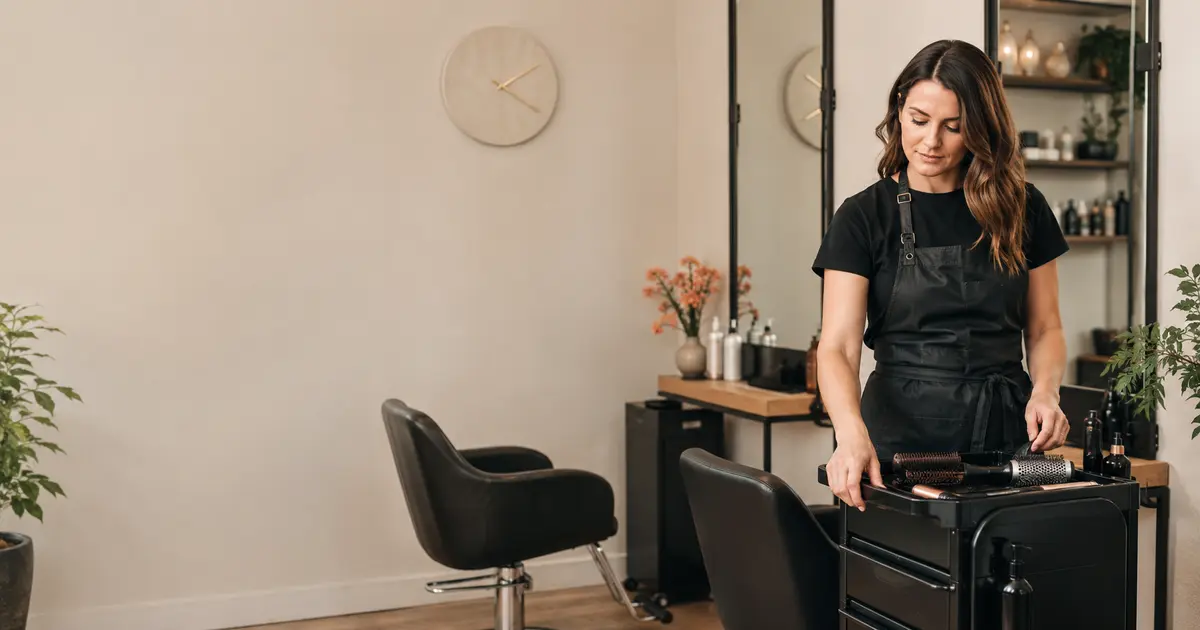
A hairdresser's day shifts when the calendar reserves less time than the service actually needs. The first ten-minute overrun enters the next appointment, removes preparation time and can grow with every client. The solution is not simply to work faster. Separate services that genuinely take different amounts of time, measure complete visits and configure realistic durations before opening those hours to online booking. A reliable schedule protects clients, the professional's pace and the quality of the result.
See How a Small Error Becomes a Full-Day Delay
A delay rarely begins with the client who waits at the end of the day. It often starts with the first service whose duration was based on the fastest possible case. A haircut reserved for forty minutes may also require consultation, washing, sectioning, finishing and payment. When those steps are missing from the estimate, the next client arrives before the chair is ready.
The delay then moves through the schedule:
- consultation uses minutes assigned to the technical work;
- finishing continues into the next arrival time;
- cleaning and preparation are shortened or postponed;
- the next service begins already behind schedule;
- the professional loses any chance to recover calmly.
Write down the first moment the day slips, not only the final total. This reveals whether the problem is one inaccurate service, an incomplete description or an appointment agreed outside the calendar. The cause must be corrected where it begins.
Separate Services When Their Scope Changes Time
One generic “haircut” option may be convenient to create, but it is not useful if real visits vary widely. A simple trim, a major shape change and a cut with extensive blow-dry finishing can occupy different parts of the day. Colour services vary even more by technique, length, density and finishing.
Create separate bookable choices when clients can understand the difference and the time changes predictably. Use names that describe the result rather than internal salon codes. Keep highly variable transformations outside immediate confirmation until you have enough information. KLIOSO displays the services and durations you configure; it does not inspect hair or decide which technique is appropriate. A smaller menu of accurate standard options is safer than a long list of vague services. If two options repeatedly take the same time and cause no confusion, they may remain together. Split them only when the schedule benefits.
Measure the Visit from Chair to Chair
Do not time only the scissors, colour application or blow-dry. Measure the period during which that appointment occupies your working capacity. Start when you must be ready for the client and finish when the station can receive the next person. Use several ordinary visits rather than one unusually fast or difficult example.
Include the parts that regularly occur:
- greeting and a focused consultation;
- preparation, washing and sectioning;
- the complete technical service;
- finishing and the client's final check;
- payment or recording important details;
- resetting tools and the workstation.
Record actual start and ready-again times for one week. Look for a stable range, then choose a duration that fits normal work rather than an ideal minimum. If a particular step happens only for some clients, decide whether it requires a separate service choice or a conversation before confirmation. Measurement replaces guesswork with evidence from your own salon.
Configure Durations Before Publishing Availability
Once the service list is clear, enter a realistic duration for each option and verify the working hours. Add every appointment already accepted by phone or message before sharing the public page. KLIOSO uses configured service duration, calendar settings and existing appointments to determine which start times can fit.
Test the booking route from another device. Choose a short haircut, a longer colour service and a finishing option, then compare the offered times with the day you could actually deliver. A long service should not appear in a gap that is too small. The finalized test appointment should occupy the expected place in the work calendar; remove or label the test afterward. Do not claim an hour in a message and delay entering it. Accurate availability depends on all confirmed work reaching the schedule before another client sees that time.
Keep Uncertain Colour Work Outside Instant Booking
Some services cannot receive an honest duration from a name alone. Colour correction, major lightening, work after home dye or a dramatic transformation may depend on the starting condition and desired result. Treat this as a professional assessment, not a failure of online booking.
Before confirming a variable service:
- ask for the current colour and recent history;
- request useful reference images when needed;
- clarify the result the client expects;
- decide whether consultation is required first;
- estimate the correct service and total duration;
- add only the final agreed appointment to the calendar.
Do not create one short “colour” option simply to make every request immediately bookable. It produces a confident-looking time that may be impossible to keep. Standard cuts and predictable services can remain self-service, while uncertain transformations stay in a controlled conversation until enough information exists.
Review Patterns Instead of Blaming Individual Days
At the end of each week, compare planned durations with what happened. One exceptional delay does not require rebuilding every service, but a pattern does. If the same haircut runs fifteen minutes late repeatedly, increase its duration or separate the version that needs longer finishing. If one colour service ends early consistently, check whether its setting is unnecessarily blocking useful time.
Review new bookings as well. Clients who repeatedly choose the wrong option may be reacting to unclear names, not ignoring instructions. Improve the wording before adding more rules. Keep already confirmed visits stable and contact the client if a correction is necessary. The useful question is not “Who made us late?” but “Which repeatable condition was missing from the schedule?” Small weekly corrections help the working day remain realistic as technique, speed and service mix change.
The Key Point
A hairdresser's day stays on time when every service reserves the capacity it normally consumes. Measure complete visits, separate predictable differences and discuss uncertain transformations before confirming them. Then configure those durations, keep working hours and existing appointments current, and test what clients can actually book. KLIOSO uses the service times you provide to calculate available starts; it cannot replace professional estimation. Accurate inputs protect each confirmed client from the delay created by an unrealistic earlier slot. Accurate durations also create a calmer handover between clients and make the published availability easier to trust.
Frequently asked questions
Build a Schedule That Holds
KLIOSO combines service duration, working hours and existing appointments to show booking times that can genuinely fit your salon day.
Start free ↗